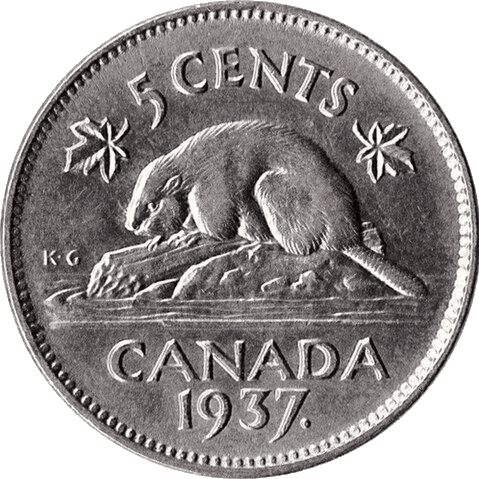
Canada 5¢ (pure nickel)
$0.08
1922–1942 · 4.6g
Royal Canadian Mint 5¢ pieces span pure nickel (1922–1981), wartime tombac and steel, cupronickel (1982–1999), and modern nickel-plated steel. Calculate the intrinsic metal value of each composition era at live spot prices.
Mode: Number of coins
Canadian 5¢ pieces went through five distinct compositions: pure nickel (1922–1942, 1946–1981), tombac brass (1942–43), chromium-plated steel (1944–45 and parts of 1951–54), cupronickel (1982–1999), and nickel-plated steel (2000–present). The pure-nickel issues contain ~4.54 g of straight Ni and can carry meaningful intrinsic value when nickel trades high on the LME.
Pure nickel 5¢ pieces from 1922–1981 (excluding the wartime tombac and steel years) contain ~4.54 g of pure nickel — at typical LME nickel prices that's several times face value. Cupronickel (1982–1999) pieces are mostly copper and worth somewhat less. Modern nickel-plated steel (2000+) has trivial metal value.
Tombac is an 88% copper / 12% zinc brass alloy used for Canadian 5¢ pieces in 1942 and most of 1943 due to wartime nickel rationing. These are 12-sided coins and are quite distinctive — slightly heavier (4.54 g) but with markedly different colour.
Two reasons: nickel prices rose sharply through the late 1970s making pure-nickel coinage uneconomic, and the Royal Canadian Mint transitioned to cheaper cupronickel in 1982, then nickel-plated steel in 2000 as commodity costs climbed further.
No. The Currency Act and associated regulations prohibit melting, breaking up, or using Canadian coins for any purpose other than their intended use as currency. This tool is for reference and inventory valuation only.
Standard Royal Canadian Mint rolls of 5¢ contain 40 coins ($2.00 face value), the same as US nickel rolls.